Buy web-publishers.com ?
We are moving the project
web-publishers.com .
Are you interested in purchasing the domain
web-publishers.com ?
domain@kv-gmbh.de · 0541-91531010
Buy web-publishers.com ?
Is allosteric inhibition the same as non-competitive inhibition?
Allosteric inhibition and non-competitive inhibition are not the same, although they are related. Non-competitive inhibition refers to the binding of an inhibitor to a site on the enzyme that is not the active site, thereby preventing the substrate from binding to the active site. Allosteric inhibition, on the other hand, occurs when an inhibitor binds to a site on the enzyme that is distinct from the active site, causing a conformational change in the enzyme that reduces its activity. While both types of inhibition involve the binding of an inhibitor to a site other than the active site, allosteric inhibition specifically involves a change in the enzyme's shape and activity. **
What type of inhibition occurs through allosteric activation/inhibition?
Allosteric inhibition occurs when a molecule binds to an allosteric site on an enzyme, causing a conformational change that reduces the enzyme's activity. This type of inhibition is non-competitive, meaning it does not compete with the substrate for the active site. Allosteric activation, on the other hand, occurs when a molecule binds to an allosteric site and enhances the enzyme's activity. Both allosteric inhibition and activation involve the binding of a regulatory molecule to a site other than the active site of the enzyme, leading to a change in the enzyme's activity. **

Similar search terms for Inhibition
Top-Angebote
Products related to Inhibition:
-
Huddly Canvas Whiteboard Content Camera KitHuddly Canvas whiteboard content camera kit for meeting rooms. The camera mounts above a whiteboard and captures its contents so they can be shared clearly with remote participants in video calls.1003,49 £*Shipping: 0,00 £Secure redirect to the provider
-
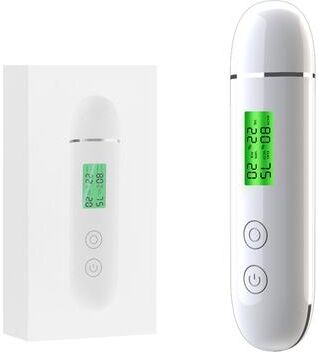
GlowBake Advanced Skin Tester, Face Skin Moisture & Oil Content Analyzer Advanced Skin Tester, Face Skin Moisture & Oil Content AnalyzerDiscover your skins true condition with our advanced Skin Tester a compact yet powerful face skin analyzer designed to measure moisture, oil content, skin water, cheek elastic quality, and even estimate skin age in seconds. Ideal for home use or pro...27,97 $*Shipping: 0,00 $Secure redirect to the provider
-
Rotolight VideoVlogging RL48 LED Ring Light Kit for Content CreatorsRotolight VideoVlogging RL48 LED Ring Light Kit – For Content Creators The Rotolight VideoVlogging RL48 LED Ring Light Kit is designed to deliver professional-quality lighting for content creators, vloggers, and photographers. It provides soft, even illumination that enhances facial features, reduces shadows, and improves overall video and photo quality. Compact and easy to use, the RL48 is ideal for streaming, makeup tutorials, video calls, and social media content creation. Its lightweight design makes it highly portable, allowing you to set up professional lighting anywhere, whether at home or on the go.16,99 £*Shipping: 0,00 £Secure redirect to the provider
-
Fusion Finds Portable Selfie Mirror For Photography Convex Wide Angle Travel Mirror For Content Creators Portable Selfie Mirror For Photography Convex Wide Angle Travel Mirror For Content CreatorsExperience a whole new perspective with this portable selfie mirror designed to elevate your photos, videos, and everyday adventures. Whether you're a content creator, traveler, or selfie enthusiast, this compact accessory helps capture unique...32,97 $*Shipping: 0,00 $Secure redirect to the provider




-
What is the difference between competitive inhibition and allosteric inhibition?
Competitive inhibition occurs when a molecule competes with the substrate for the active site of an enzyme, effectively blocking the substrate from binding and inhibiting the enzyme's activity. In contrast, allosteric inhibition occurs when a molecule binds to a site on the enzyme other than the active site, causing a conformational change that reduces the enzyme's activity. While competitive inhibition directly competes with the substrate for the active site, allosteric inhibition involves binding to a different site on the enzyme to regulate its activity. **
-
Is allosteric inhibition irreversible?
Allosteric inhibition is typically reversible, meaning that the inhibitor can bind to the allosteric site and block the activity of the enzyme, but can also dissociate from the site, allowing the enzyme to regain its activity. This is in contrast to irreversible inhibition, where the inhibitor forms a covalent bond with the enzyme, permanently inactivating it. **
-
Non-competitive inhibition, right?
Non-competitive inhibition is a type of enzyme inhibition where the inhibitor binds to a site on the enzyme that is not the active site. This binding causes a conformational change in the enzyme, making it less effective at catalyzing the reaction. Non-competitive inhibitors do not compete with the substrate for binding to the enzyme. Instead, they can bind to the enzyme-substrate complex or to a separate allosteric site on the enzyme. **
-
What is allosteric inhibition?
Allosteric inhibition is a type of enzyme regulation where a molecule binds to a site on the enzyme that is different from the active site, causing a conformational change in the enzyme's structure. This change reduces the enzyme's activity and ability to bind to its substrate, ultimately inhibiting its function. Allosteric inhibition is a reversible process and can be used to regulate enzyme activity in response to changing cellular conditions. **


What is the difference between allosteric inhibition and competitive inhibition in biology?
Allosteric inhibition occurs when a molecule binds to an allosteric site on an enzyme, causing a conformational change that reduces the enzyme's activity. This type of inhibition is non-competitive and can affect multiple enzymes in a metabolic pathway. On the other hand, competitive inhibition occurs when a molecule competes with the substrate for the active site of the enzyme, effectively blocking the substrate from binding and reducing the enzyme's activity. Competitive inhibition can be overcome by increasing the concentration of the substrate, while allosteric inhibition cannot be overcome in the same way. **
What is the difference between non-competitive inhibition and allosteric inhibition in biochemistry?
Non-competitive inhibition occurs when an inhibitor binds to an enzyme at a site other than the active site, causing a conformational change in the enzyme that reduces its activity. This type of inhibition does not compete with the substrate for binding to the active site. On the other hand, allosteric inhibition occurs when an inhibitor binds to an allosteric site on the enzyme, causing a conformational change that reduces the enzyme's activity. Allosteric inhibition can be reversible or irreversible, and it can be overcome by increasing the concentration of the substrate. **
Top-Angebote
Products related to Inhibition:
-
StayWell LCD Digital Skin Detector Pen Face Skin Tester, Smart Water Oil Fluorescent Content Facial Moisture Analyzer Skin Care LCD Digital Skin Detector Pen Face Skin Tester, Smart Water Oil Fluorescent Content Facial Moisture Analyzer Skin CareUnlock Your Best Skin Ever Experience precision skin analysis at home with the bold, clear LCD Digital Skin Detector Pen. No more guessingthis smart device measures moisture, oil balance, elasticity, and even detects harmful fluorescent agents in...44,97 $*Shipping: 0,00 $Secure redirect to the provider
-
Disney: Advent Calendar Twisted Tales With 24 Books Box Set Including Twisted Story Content - Ages 12-16 - Paperback Autumn PublishingDiscover Twisted Tales from Disney this Christmas! Titles in this Set: An Expert In Gibberish - A Twisted Tale Novella 2. Colouring - Book One 3. A New Dawn - A Twisted Tale Novella 4. Posters - Book One 5. Colouring - Book Two 6. A First Mission - A Twisted Tale Novella 7. Colouring - Book Three 8. Dust To Dust - A Twisted Tale Novella 9. Quotes - Book One 10. Colouring - Book Four 11. Best of Friends - A Twisted Tale Novella 12. Dot Colouring - Book One 13. Et Voila - A Twisted Tale Novella 14. Colouring - Book Five 15. Gonna Take You There - A Twisted Tale Novella 16. Posters - Book Two 17. Human Again - A Twisted Tale Novella 18. Colouring - Book Six 19. Quiz - A Collection Of Mind Twisting Questions 20. Lady Saves The Tramp - A Twisted Tale Novella 21. Dot Colouring - Book Two 22. Quotes - Book Two 23. Colouring - Book Seven 24. The Rose And The Thorns - A Twisted Tale Novella Feature Specification Full Title Disney: Twisted Tales Advent Calendar (24 Books) Series Twisted Tales (Reimagined Disney Classics) Author Various (Jen Calonita, Elizabeth Lim, Liz Braswell) Format 24 Paperback Books in a Large Folder Case Target Age Young Adult (Ages 12 to 16) Themes Fantasy, Dark Retellings, Magic, Heroism Key Stories Aladdin, Little Mermaid, Beauty and the Beast Publisher Autumn Publishing (Bonnier Books) Unlock the magic of Disney in this Advent Calendar packed with exclusive content, including 10 brand-new short stories. 10 x Novellas - Twists on much-loved disney tales! 9 x Adult Colouring - Create twisted illustrations and dot colouring designs! 2 x Poster Art Books - Poster art from Disney favourites! 2 x Quote Books - Words of wisdom and more! 1 x Quiz Book - Test your twisted knowledge! { "@context": "https://schema.org/", "@type": "Product", "name": "Disney Twisted Tales Advent Calendar: 24 Book YA Collection", "image": "https://www.books2door.com/cdn/shop/products/twistedtalesadvent.jpg", "description": "Countdown to Christmas with 24 reimagined Disney stories. This YA advent calendar is perfect for fans of the Twisted Tales series aged 12-16.", "brand": { "@type": "Brand", "name": "Disney" }, "offers": { "@type": "Offer", "priceCurrency": "GBP", "price": "19.99", "availability": "https://schema.org/InStock", "url": "https://www.books2door.com/products/disney-advent-calendar-twisted-tales-with-24-books-box-set-including-twisted-story-content-ages-12-16-paperback" }, "mainEntity": { "@type": "FAQPage", "mainEntity": [ { "@type": "Question", "name": "Is this advent calendar suitable for teenagers?", "acceptedAnswer": { "@type": "Answer", "text": "Yes, this edition of the Disney advent calendar is specifically designed for the Young Adult market, aged 12 to 16, featuring more mature Twisted Tales content." } }, { "@type": "Question", "name": "How many books are in the Disney Twisted Tales advent calendar?", "acceptedAnswer": { "@type": "Answer", "text": "There are 24 individual paperback books included, one for each day of the December...21,98 £*Shipping: 2,99 £Secure redirect to the provider
-
Huddly Canvas Whiteboard Content Camera KitHuddly Canvas whiteboard content camera kit for meeting rooms. The camera mounts above a whiteboard and captures its contents so they can be shared clearly with remote participants in video calls.1003,49 £*Shipping: 0,00 £Secure redirect to the provider
-
GlowBake Advanced Skin Tester, Face Skin Moisture & Oil Content Analyzer Advanced Skin Tester, Face Skin Moisture & Oil Content AnalyzerDiscover your skins true condition with our advanced Skin Tester a compact yet powerful face skin analyzer designed to measure moisture, oil content, skin water, cheek elastic quality, and even estimate skin age in seconds. Ideal for home use or pro...27,97 $*Shipping: 0,00 $Secure redirect to the provider
-
Is allosteric inhibition the same as non-competitive inhibition?
Allosteric inhibition and non-competitive inhibition are not the same, although they are related. Non-competitive inhibition refers to the binding of an inhibitor to a site on the enzyme that is not the active site, thereby preventing the substrate from binding to the active site. Allosteric inhibition, on the other hand, occurs when an inhibitor binds to a site on the enzyme that is distinct from the active site, causing a conformational change in the enzyme that reduces its activity. While both types of inhibition involve the binding of an inhibitor to a site other than the active site, allosteric inhibition specifically involves a change in the enzyme's shape and activity. **
-
What type of inhibition occurs through allosteric activation/inhibition?
Allosteric inhibition occurs when a molecule binds to an allosteric site on an enzyme, causing a conformational change that reduces the enzyme's activity. This type of inhibition is non-competitive, meaning it does not compete with the substrate for the active site. Allosteric activation, on the other hand, occurs when a molecule binds to an allosteric site and enhances the enzyme's activity. Both allosteric inhibition and activation involve the binding of a regulatory molecule to a site other than the active site of the enzyme, leading to a change in the enzyme's activity. **
-
What is the difference between competitive inhibition and allosteric inhibition?
Competitive inhibition occurs when a molecule competes with the substrate for the active site of an enzyme, effectively blocking the substrate from binding and inhibiting the enzyme's activity. In contrast, allosteric inhibition occurs when a molecule binds to a site on the enzyme other than the active site, causing a conformational change that reduces the enzyme's activity. While competitive inhibition directly competes with the substrate for the active site, allosteric inhibition involves binding to a different site on the enzyme to regulate its activity. **
-
Is allosteric inhibition irreversible?
Allosteric inhibition is typically reversible, meaning that the inhibitor can bind to the allosteric site and block the activity of the enzyme, but can also dissociate from the site, allowing the enzyme to regain its activity. This is in contrast to irreversible inhibition, where the inhibitor forms a covalent bond with the enzyme, permanently inactivating it. **
Similar search terms for Inhibition
-
Rotolight VideoVlogging RL48 LED Ring Light Kit for Content CreatorsRotolight VideoVlogging RL48 LED Ring Light Kit – For Content Creators The Rotolight VideoVlogging RL48 LED Ring Light Kit is designed to deliver professional-quality lighting for content creators, vloggers, and photographers. It provides soft, even illumination that enhances facial features, reduces shadows, and improves overall video and photo quality. Compact and easy to use, the RL48 is ideal for streaming, makeup tutorials, video calls, and social media content creation. Its lightweight design makes it highly portable, allowing you to set up professional lighting anywhere, whether at home or on the go.16,99 £*Shipping: 0,00 £Secure redirect to the provider
-
Fusion Finds Portable Selfie Mirror For Photography Convex Wide Angle Travel Mirror For Content Creators Portable Selfie Mirror For Photography Convex Wide Angle Travel Mirror For Content CreatorsExperience a whole new perspective with this portable selfie mirror designed to elevate your photos, videos, and everyday adventures. Whether you're a content creator, traveler, or selfie enthusiast, this compact accessory helps capture unique...32,97 $*Shipping: 0,00 $Secure redirect to the provider
-
Uplift Treasures Extra Large Halloween Triangle Spider Web 5M 7M Elastic Simulated Spider Web Decoration spider And Web 5 M Web And SpiderProduct Description Create a haunting Halloween atmosphere with this extralarge triangle spider web. Made from soft, stretchy elastic material, it expands up to 5M or 7M to cover walls, porches, trees, fences, and indoor spaces. Perfect for spooky...75,97 $*Shipping: 0,00 $Secure redirect to the provider
-
Fusion Finds Portable Convex Travel Makeup Mirror Wide Angle Foldable Vanity Mirror For Vloggers & Content Creators Portable Convex Travel Makeup Mirror Wide Angle Foldable Vanity Mirror For Vloggers & Content CreatorsEnjoy more creative angles wherever inspiration strikes. This Travel Makeup Mirror is designed with a unique convex surface that expands your field of view, helping you capture eyecatching photos, videos, and styling shots with ease. Whether you're...31,97 $*Shipping: 0,00 $Secure redirect to the provider
-
Non-competitive inhibition, right?
Non-competitive inhibition is a type of enzyme inhibition where the inhibitor binds to a site on the enzyme that is not the active site. This binding causes a conformational change in the enzyme, making it less effective at catalyzing the reaction. Non-competitive inhibitors do not compete with the substrate for binding to the enzyme. Instead, they can bind to the enzyme-substrate complex or to a separate allosteric site on the enzyme. **
-
What is allosteric inhibition?
Allosteric inhibition is a type of enzyme regulation where a molecule binds to a site on the enzyme that is different from the active site, causing a conformational change in the enzyme's structure. This change reduces the enzyme's activity and ability to bind to its substrate, ultimately inhibiting its function. Allosteric inhibition is a reversible process and can be used to regulate enzyme activity in response to changing cellular conditions. **
-
What is the difference between allosteric inhibition and competitive inhibition in biology?
Allosteric inhibition occurs when a molecule binds to an allosteric site on an enzyme, causing a conformational change that reduces the enzyme's activity. This type of inhibition is non-competitive and can affect multiple enzymes in a metabolic pathway. On the other hand, competitive inhibition occurs when a molecule competes with the substrate for the active site of the enzyme, effectively blocking the substrate from binding and reducing the enzyme's activity. Competitive inhibition can be overcome by increasing the concentration of the substrate, while allosteric inhibition cannot be overcome in the same way. **
-
What is the difference between non-competitive inhibition and allosteric inhibition in biochemistry?
Non-competitive inhibition occurs when an inhibitor binds to an enzyme at a site other than the active site, causing a conformational change in the enzyme that reduces its activity. This type of inhibition does not compete with the substrate for binding to the active site. On the other hand, allosteric inhibition occurs when an inhibitor binds to an allosteric site on the enzyme, causing a conformational change that reduces the enzyme's activity. Allosteric inhibition can be reversible or irreversible, and it can be overcome by increasing the concentration of the substrate. **
* All prices are inclusive of VAT and, if applicable, plus shipping costs. The offer information is based on the details provided by the respective shop and is updated through automated processes. Real-time updates do not occur, so deviations can occur in individual cases. ** Note: Parts of this content were created by AI.