Buy web-publishers.com ?
We are moving the project
web-publishers.com .
Are you interested in purchasing the domain
web-publishers.com ?
domain@kv-gmbh.de · 0541-91531010
Buy web-publishers.com ?
Are photons electrons?
No, photons are not electrons. Photons are elementary particles that make up light and electromagnetic radiation, while electrons are negatively charged subatomic particles that are part of atoms. Photons have no mass and travel at the speed of light, while electrons have mass and are bound to the nucleus of an atom. **
What happens to photons?
Photons are elementary particles that make up light. They do not have mass and travel at the speed of light. When photons interact with matter, they can be absorbed, reflected, or transmitted. Absorption of photons can result in the excitation of electrons, leading to various physical and chemical processes. **

Similar search terms for Photons
Top-Angebote
Products related to Photons:
-
How are photons created?
Photons are created through a process called electromagnetic radiation. This occurs when an atom absorbs energy, causing its electrons to move to a higher energy level. When the electrons return to their original energy level, they release the absorbed energy in the form of photons. This process can happen in various ways, such as through thermal radiation, chemical reactions, or nuclear reactions. **
-
How can one convert the energy of different photons into monochromatic photons?
One way to convert the energy of different photons into monochromatic photons is through a process called frequency doubling or second harmonic generation. This involves passing the photons through a nonlinear crystal, which causes the photons to combine and create new photons with double the frequency and half the wavelength of the original photons. This results in monochromatic photons with a single, specific wavelength. Another method is through the use of filters or monochromators, which can selectively filter out photons of specific wavelengths, allowing only monochromatic photons to pass through. **
-
Why can photons penetrate matter?
Photons can penetrate matter because they do not have an electric charge and are not affected by electromagnetic forces within the material. Additionally, photons do not have mass, allowing them to travel at the speed of light and pass through matter without being absorbed or deflected. This property of photons enables them to interact with atoms and molecules in the material, leading to phenomena such as absorption, reflection, and transmission. **
-
What distinguishes photons and protons?
Photons are elementary particles that carry electromagnetic radiation, such as light, while protons are subatomic particles found in the nucleus of an atom. Photons have no mass and travel at the speed of light, while protons have mass and are composed of quarks. Additionally, photons do not have an electric charge, while protons have a positive electric charge. **
How can photons have mass?
Photons are massless particles according to the Standard Model of particle physics. They travel at the speed of light and have zero rest mass. However, in certain theoretical models beyond the Standard Model, such as some versions of string theory, it is possible for photons to acquire a small amount of mass through interactions with other particles or fields. This mass is typically very small and has not been experimentally observed. **
How far do photons travel?
Photons, as particles of light, travel at the speed of light in a vacuum, which is approximately 299,792 kilometers per second. This means that photons can travel vast distances in a very short amount of time. However, their travel distance can be affected by factors such as absorption, reflection, and scattering, which can cause them to be absorbed or redirected before reaching their destination. **
Top-Angebote
Products related to Photons:
-
Disney: Advent Calendar Twisted Tales With 24 Books Box Set Including Twisted Story Content - Ages 12-16 - Paperback Autumn PublishingDiscover Twisted Tales from Disney this Christmas! Titles in this Set: An Expert In Gibberish - A Twisted Tale Novella 2. Colouring - Book One 3. A New Dawn - A Twisted Tale Novella 4. Posters - Book One 5. Colouring - Book Two 6. A First Mission - A Twisted Tale Novella 7. Colouring - Book Three 8. Dust To Dust - A Twisted Tale Novella 9. Quotes - Book One 10. Colouring - Book Four 11. Best of Friends - A Twisted Tale Novella 12. Dot Colouring - Book One 13. Et Voila - A Twisted Tale Novella 14. Colouring - Book Five 15. Gonna Take You There - A Twisted Tale Novella 16. Posters - Book Two 17. Human Again - A Twisted Tale Novella 18. Colouring - Book Six 19. Quiz - A Collection Of Mind Twisting Questions 20. Lady Saves The Tramp - A Twisted Tale Novella 21. Dot Colouring - Book Two 22. Quotes - Book Two 23. Colouring - Book Seven 24. The Rose And The Thorns - A Twisted Tale Novella Feature Specification Full Title Disney: Twisted Tales Advent Calendar (24 Books) Series Twisted Tales (Reimagined Disney Classics) Author Various (Jen Calonita, Elizabeth Lim, Liz Braswell) Format 24 Paperback Books in a Large Folder Case Target Age Young Adult (Ages 12 to 16) Themes Fantasy, Dark Retellings, Magic, Heroism Key Stories Aladdin, Little Mermaid, Beauty and the Beast Publisher Autumn Publishing (Bonnier Books) Unlock the magic of Disney in this Advent Calendar packed with exclusive content, including 10 brand-new short stories. 10 x Novellas - Twists on much-loved disney tales! 9 x Adult Colouring - Create twisted illustrations and dot colouring designs! 2 x Poster Art Books - Poster art from Disney favourites! 2 x Quote Books - Words of wisdom and more! 1 x Quiz Book - Test your twisted knowledge! { "@context": "https://schema.org/", "@type": "Product", "name": "Disney Twisted Tales Advent Calendar: 24 Book YA Collection", "image": "https://www.books2door.com/cdn/shop/products/twistedtalesadvent.jpg", "description": "Countdown to Christmas with 24 reimagined Disney stories. This YA advent calendar is perfect for fans of the Twisted Tales series aged 12-16.", "brand": { "@type": "Brand", "name": "Disney" }, "offers": { "@type": "Offer", "priceCurrency": "GBP", "price": "19.99", "availability": "https://schema.org/InStock", "url": "https://www.books2door.com/products/disney-advent-calendar-twisted-tales-with-24-books-box-set-including-twisted-story-content-ages-12-16-paperback" }, "mainEntity": { "@type": "FAQPage", "mainEntity": [ { "@type": "Question", "name": "Is this advent calendar suitable for teenagers?", "acceptedAnswer": { "@type": "Answer", "text": "Yes, this edition of the Disney advent calendar is specifically designed for the Young Adult market, aged 12 to 16, featuring more mature Twisted Tales content." } }, { "@type": "Question", "name": "How many books are in the Disney Twisted Tales advent calendar?", "acceptedAnswer": { "@type": "Answer", "text": "There are 24 individual paperback books included, one for each day of the December...21,98 £*Shipping: 2,99 £Secure redirect to the provider
-
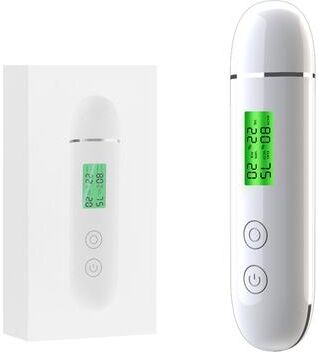
StayWell LCD Digital Skin Detector Pen Face Skin Tester, Smart Water Oil Fluorescent Content Facial Moisture Analyzer Skin Care LCD Digital Skin Detector Pen Face Skin Tester, Smart Water Oil Fluorescent Content Facial Moisture Analyzer Skin CareUnlock Your Best Skin Ever Experience precision skin analysis at home with the bold, clear LCD Digital Skin Detector Pen. No more guessingthis smart device measures moisture, oil balance, elasticity, and even detects harmful fluorescent agents in...44,97 $*Shipping: 0,00 $Secure redirect to the provider
-
Are photons electrons?
No, photons are not electrons. Photons are elementary particles that make up light and electromagnetic radiation, while electrons are negatively charged subatomic particles that are part of atoms. Photons have no mass and travel at the speed of light, while electrons have mass and are bound to the nucleus of an atom. **
-
What happens to photons?
Photons are elementary particles that make up light. They do not have mass and travel at the speed of light. When photons interact with matter, they can be absorbed, reflected, or transmitted. Absorption of photons can result in the excitation of electrons, leading to various physical and chemical processes. **
-
How are photons created?
Photons are created through a process called electromagnetic radiation. This occurs when an atom absorbs energy, causing its electrons to move to a higher energy level. When the electrons return to their original energy level, they release the absorbed energy in the form of photons. This process can happen in various ways, such as through thermal radiation, chemical reactions, or nuclear reactions. **
-
How can one convert the energy of different photons into monochromatic photons?
One way to convert the energy of different photons into monochromatic photons is through a process called frequency doubling or second harmonic generation. This involves passing the photons through a nonlinear crystal, which causes the photons to combine and create new photons with double the frequency and half the wavelength of the original photons. This results in monochromatic photons with a single, specific wavelength. Another method is through the use of filters or monochromators, which can selectively filter out photons of specific wavelengths, allowing only monochromatic photons to pass through. **
Similar search terms for Photons
-
Why can photons penetrate matter?
Photons can penetrate matter because they do not have an electric charge and are not affected by electromagnetic forces within the material. Additionally, photons do not have mass, allowing them to travel at the speed of light and pass through matter without being absorbed or deflected. This property of photons enables them to interact with atoms and molecules in the material, leading to phenomena such as absorption, reflection, and transmission. **
-
What distinguishes photons and protons?
Photons are elementary particles that carry electromagnetic radiation, such as light, while protons are subatomic particles found in the nucleus of an atom. Photons have no mass and travel at the speed of light, while protons have mass and are composed of quarks. Additionally, photons do not have an electric charge, while protons have a positive electric charge. **
-
How can photons have mass?
Photons are massless particles according to the Standard Model of particle physics. They travel at the speed of light and have zero rest mass. However, in certain theoretical models beyond the Standard Model, such as some versions of string theory, it is possible for photons to acquire a small amount of mass through interactions with other particles or fields. This mass is typically very small and has not been experimentally observed. **
-
How far do photons travel?
Photons, as particles of light, travel at the speed of light in a vacuum, which is approximately 299,792 kilometers per second. This means that photons can travel vast distances in a very short amount of time. However, their travel distance can be affected by factors such as absorption, reflection, and scattering, which can cause them to be absorbed or redirected before reaching their destination. **
* All prices are inclusive of VAT and, if applicable, plus shipping costs. The offer information is based on the details provided by the respective shop and is updated through automated processes. Real-time updates do not occur, so deviations can occur in individual cases. ** Note: Parts of this content were created by AI.